Why We Crave That “New” or “Clean” Smell — and What It Really Means for Indoor Air Quality
- John Slavich

- 2 days ago
- 12 min read
Updated: 6 hours ago
The smell we love and what we miss when we trust it too quickly.
What this article explains
A “new” smell is not proof of clean air.
We learn to trust certain smells, even when they tell us less than we think.
That “new-car smell”? It is chemistry, not cleanliness.
That ‘new nursery smell’ may not mean the room is ready.
When heat and humidity rise, old odours may arise.
What a New or Clean Smell Really Means for indoor air quality
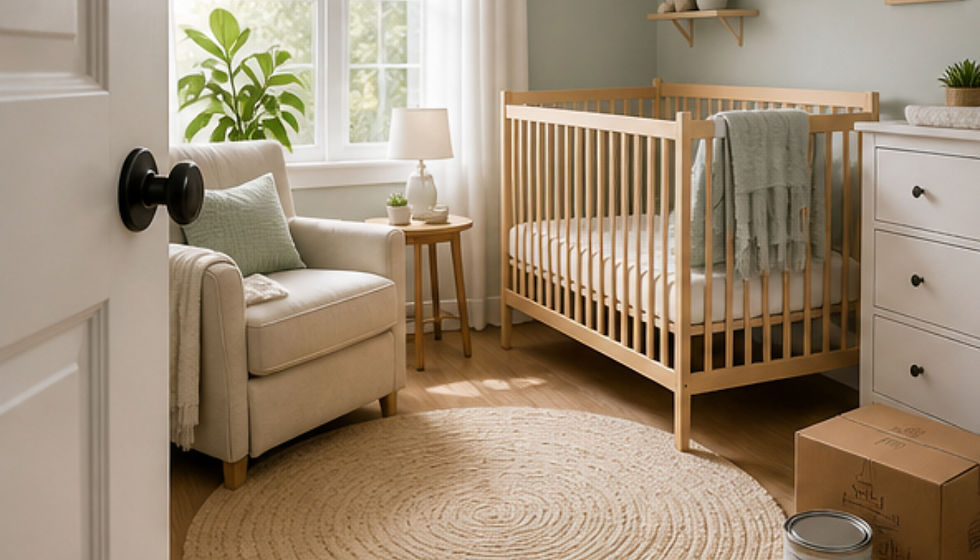
She stood in the nursery doorway and breathed in that new and clean smell . Freshly painted walls. A new mattress still wrapped in plastic. A dresser assembled the night before. Beside it stood the crib, its tags still attached to the rail.
The room smelled clean. It smelled finished. It smelled ready for the baby to come home.
That quiet satisfaction associated with a “new” or “clean” smell is familiar in many homes. We recognize it in new cars, freshly painted rooms, new carpets, recently cleaned kitchens, renovated basements, and bedrooms prepared for a child. A different smell can make a space feel fresh, complete, and ready to use.
But when something smells new or clean, what does it mean for indoor air quality? It often means that materials or products in the space are releasing substances into the air. The source may be paint, primer, adhesives, carpet backing, flooring, foam, composite wood furniture, packaging, cleaning products, air fresheners, or several of these sources at the same time.
This does not mean that every new smell is dangerous. It also does not mean that the smell should automatically be ignored.
An odour is information. It tells us that something has changed in the space. The more useful question is whether the odour is expected and gradually fading, or whether it is strong, persistent, concentrated, irritating, or present in a room where someone spends many hours.
Health Canada describes volatile organic compounds, or VOCs, as a large group of chemicals found in indoor and outdoor air. Some VOCs have distinctive odours at higher concentrations, but they may also be present when no smell is detectable. Their potential health effects depend on the specific compounds present, their concentration, and the length of exposure.
Why some smells feel “new” or “clean”
Smell is not only chemical. It is also emotional.
We do not experience an odour as chemistry alone. We connect it to places, products, memories, habits, and expectations. Lemon may evoke a freshly cleaned kitchen. Pine may suggest disinfectant or floor cleaner. Fresh paint can signal renovation and improvement. The smell of a new car may suggest something unused, protected, and recently purchased.

In her 2005 article, “Odor-associative learning and emotion: Effects on perception and behavior,” published in Chemical Senses, Rachel S. Herz explains that whether an odour feels pleasant or unpleasant can depend on the emotional context in which we first encountered it. A smell can become familiar, reassuring, unpleasant, or worth avoiding because of the experiences attached to it. The smell itself does not prove anything about cleanliness or indoor air quality.
This helps explain why “clean” has become a category of smell in many homes. For decades, cleaning products have been scented with lemon, pine, lavender, citrus, linen, ocean, and other “fresh” fragrances. Over time, many of us have learned to associate those odours with a completed cleaning job. The room smells different, so it feels cleaner.
But feeling cleaner is not the same as being cleaner.
A room may smell like lemon because it was thoroughly cleaned. It may also smell like lemon because a fragranced product was sprayed into the air while the original source of the odour remained untouched. A nursery may smell “new” because it was carefully prepared. It may also smell new because the paint, furniture, mattress foam, flooring, packaging, and cleaning products are all releasing odours at the same time.

A familiar scent can reassure us before we understand what is producing it. That is why a “fresh” smell is not proof of clean air. It tells us how our brain is interpreting the odour, not what is creating it, whether the original source has been removed, or whether another fragrance is simply covering it.
This distinction matters during an odour investigation because pleasant smells still have sources. A “new” smell may come from materials releasing compounds into the air. A “clean” smell may come from fragranced products. In some cases, the added fragrance may temporarily mask another odour without addressing its cause.
The useful question is not simply, “Does it smell clean?”
It is, “What is making that smell?”
The useful question is not simply, “Does it smell clean?” It is, “What is making that smell?”
Why new-car smell is a useful comparison
Open the door of a brand-new car and the smell is instantly recognizable. For many people, it suggests quality, novelty, and something untouched. Yet that familiar scent is not a single fragrance. It comes from the many materials used throughout the vehicle’s interior.
In its April 15, 2022 article, “How Nissan creates its signature ‘new car smell,’” CNN describes how Nissan employs trained odour specialists to evaluate vehicle components before a new model is launched. Steering wheels, seat cushions, visors, plastics, storage consoles, bonding materials, threads, adhesives, and carpeting are all assessed for the odours they release and for the way those odours combine inside the finished vehicle.

The comparison is useful because the smell may be pleasant, familiar, and carefully managed, yet it still comes from materials releasing compounds into the air.
The same principle applies in a home. A freshly renovated room may smell clean, complete, and ready to use, but that smell may be coming from paint, flooring, adhesives, foam, furniture, packaging, or several sources at once.
A pleasant smell tells us how a space is perceived. It does not, by itself, tell us whether the air is clean.
The nursery: when many small sources add up
The walls have been painted. New flooring or carpet has been installed. A crib and dresser have been assembled, the mattress unwrapped, the bedding washed, the curtains hung, and the room cleaned before the baby comes home.
None of these changes may seem significant on its own. Each source may contribute only a faint odour. Together, however, paint, adhesives, composite wood, foam, fabrics, flooring, packaging, cleaning products, and fragrances can create the unmistakable smell of a “new room.”

Health Canada identifies many of these materials and products as common indoor sources of volatile organic compounds, or VOCs. The list includes composite wood products, furnishings, flooring materials, paints, glues, varnishes, air fresheners, and cleaning products. Furniture, mattresses, cabinets, and other building materials can also release gases into indoor air through a process commonly called off-gassing.
A nursery deserves closer attention, not because a new smell automatically means that the room is unsafe, but because the conditions of exposure may be different. The room may be small, the door may remain closed, ventilation may be limited, and a baby may spend many hours sleeping there.
Health Canada identifies children as one of the groups at greater risk from VOC exposure. It also emphasizes that possible health effects depend on the particular compounds present, their concentrations, and the length of exposure. At the same time, Health Canada notes that the VOC levels normally found in Canadian homes do not usually represent a significant health risk.
The useful question is therefore not simply, “Is the paint still smelling?”
The paint may be one contributor, but the odour may also come from the flooring, adhesives, furniture, mattress foam, fabrics, packaging, cleaning products, or fragrances. In a newly prepared nursery, the smell may not come from one dominant source. It may be the combined effect of many smaller ones.
What may be behind a “New” smell
Walk into a freshly painted room, open a new dresser, or step onto newly installed flooring, and the smell may seem to come from one obvious source. In reality, a new-material smell is rarely one compound. It is usually a mixture shaped by the product, its age, temperature, humidity, ventilation, and how the room is used.
Paints, varnishes, floor finishes, glues, sealants, solvents, cleaning products, disinfectants, air fresheners, furnishings, building materials, craft supplies, and office products can all release volatile organic compounds, or VOCs. The U.S. Environmental Protection Agency explains that VOCs are emitted as gases from certain solids and liquids and that concentrations of many VOCs are consistently higher indoors than outdoors.
Composite wood furniture, cabinets, shelves, cribs, dressers, some flooring, and certain finishes raise another question: formaldehyde. Health Canada identifies formaldehyde as a VOC commonly found in indoor air. It can enter the air through off-gassing from renovation materials, furniture, cabinets, glues, paints, varnishes, floor finishes, paper products, fabrics, and composite wood products such as particleboard, medium-density fibreboard, and hardwood plywood.
Carpets and flooring can add their own odours. The source may be the carpet, backing, underpad, seams, adhesives, floor-preparation products, or nearby renovation work. A new-carpet smell should therefore be understood as a possible material and installation odour, not as proof that the floor is clean.
Cleaning products add another layer. A kitchen that smells of lemon, pine, lavender, or “fresh linen” may feel clean, but the scent may come from fragranced cleaners, degreasers, disinfectants, dishwasher products, scented garbage bags, essential oils, air fresheners, or laundry products. The EPA includes cleansers, disinfectants, moth repellents, and air fresheners among common household VOC sources.
The problem with "pleasant" indoor smell
A pleasant smell is never neutral. It can make a room feel cleaner, calmer, or more welcoming. It can also mask the odour that first drew attention. That is why fragranced cleaners, plug-in deodorizers, scented candles, essential oil diffusers, and “fresh linen” garbage bags can seem so effective. They may not remove the source of the unwanted smell. Instead, they add a stronger, more familiar fragrance.
The original odour may still be there, coming from stored chemicals, a new material, a damp cabinet, or another hidden source. But once the room smells like lemon or lavender, the brain may stop searching.
Then the fragrance fades, and the old smell returns. The home is not necessarily mysterious. The source may simply never have been removed.
Health Canada lists air fresheners and cleaning products among common indoor sources of volatile organic compounds, or VOCs. HealthLinkBC also identifies cleaning agents, air fresheners, personal care products, candles, incense, paints, varnishes, and hobby supplies as indoor VOC sources. It recommends minimizing scented products such as plug-in or aerosol deodorizers, candles, and incense.
Adding a pleasant fragrance does not clean indoor air or correct the source of an odour. It adds another layer to what is already there.
Why smell alone can mislead us about indoor air quality
Smell is useful, but it is not a chemical test. It can alert us that something has changed in a room, yet it cannot identify the compound, measure its concentration, show whether a guideline has been exceeded, or reveal whether one source or several are involved.
That is why an indoor odour should be treated as a clue, not a final answer. Health Canada notes that some volatile organic compounds, or VOCs, produce distinctive odours at higher levels, while others may be present even when nothing can be smelled. The U.S. Environmental Protection Agency also explains that the possible health effects of organic chemicals vary widely and depend partly on the level and duration of exposure.

The useful questions go beyond, “What does it smell like?” Ask instead: What changed? Where is the odour strongest? When does it worsen? Is it gradually fading?
A paint-like smell may come from paint, but primer, caulking, adhesives, varnish, or new furniture may also contribute. A furniture odour may involve composite wood, packaging, foam, fabric treatments, finishes, or cleaning products used nearby. Even a “clean” kitchen smell may come from a freshly wiped counter, products stored beneath the sink, or both.
The nose can help begin an indoor odour investigation. It cannot finish one.
When heat and humidity bring an indoor odour back
Weeks after a renovation, the smell seems to be gone. Then summer arrives. The room warms, the windows stay closed, and the odour returns.
This pattern is not unusual. Off-gassing is the release of chemicals from materials or products into the surrounding air. The U.S. Environmental Protection Agency explains that volatile organic compounds, or VOCs, are emitted as gases from certain solids and liquids, including paints, varnishes, cleaners, disinfectants, building materials, and furnishings.
Off-gassing does not always occur at a constant rate. Warmer conditions can increase emissions from some materials, making paint, adhesives, carpet backing, foam, composite wood, furniture finishes, or stored products smell more noticeable. A room that barely smelled in March may smell different in July, especially when ventilation is limited.

Formaldehyde offers a practical example. Health Canada reports that off-gassing sources generally release less formaldehyde over time, but complete dissipation can take weeks, months, or sometimes years. It also notes that some products release more formaldehyde when temperature and humidity rise, which helps explain why indoor levels are often higher during summer and in warmer climates
Health Canada also explains that off-gassing sources generally release less formaldehyde over time, but that it can take weeks, months, or sometimes years to disappear completely.
Humidity, however, should not become a convenient explanation for every returning odour. Its effect on perceived indoor air quality is more complicated. The important questions are: What material is present? What compounds might it release? How warm is the room? How much fresh air enters? Does the material respond to moisture?
In their 2007 scientific review, Peder Wolkoff and Søren K. Kjærgaard explain that relative humidity can affect perceived indoor air quality, including odour, while also influencing materials and conditions inside the room. In some cases, humidity may make an odour more noticeable. In others, temperature, source strength, restricted ventilation, or a closed door may matter more.
A crib that seemed fine after a week may smell stronger once the nursery heats up. A newly finished basement may seem odour-free through winter, only for the smell to return in July.
The pattern matters: the odour fades, the conditions change, and the odour returns. That does not identify the source, but it provides a useful clue. Note when the smell appears, where it is strongest, and what changed in the room. Sometimes, the season is not creating a new problem. It is revealing a source that was already there.
Who is spending time in the room?
An odour that clears from a well-ventilated kitchen within an hour is not the same as one that lingers for weeks in a nursery where an infant sleeps for long periods. Health Canada identifies children, seniors, pregnant people, and those with asthma, chronic pulmonary disease, or bronchitis as groups at greater risk from exposure to volatile organic compounds, or VOCs.
A nursery deserves a closer look because several conditions can come together: a small room, a closed door, warm temperatures, limited ventilation, new furniture, fresh paint, and several new products introduced at once. In that setting, the reassuring smell of “new” deserves more than a satisfied breath.
This is not a reason to panic. Health Canada also states that, for most VOCs, the concentrations normally found in Canadian homes do not usually present a significant health risk. The point is not that newly finished rooms are dangerous. It is that “it smells clean” is not an indoor air quality assessment. It is an emotional response shaped over time by advertising, household habits, and memory.
Possible health effects of VOC exposure
A “new” smell is not a diagnosis. It cannot prove that a product is causing symptoms, and one odour should never be blamed without evidence. Still, persistent VOC odours deserve attention because some compounds can affect comfort and health, especially when the source is strong, concentrated, or present in a room used for many hours.
Formaldehyde deserves particular attention because Health Canada has established residential indoor air guidelines for it. At high concentrations, it can cause burning sensations in the eyes, nose, and throat. Long-term exposure to moderate concentrations may worsen asthma symptoms, particularly in children and infants.

This does not mean that every new-smelling room is unsafe. The pattern matters. A faint paint odour that fades quickly with good ventilation and causes no irritation is different from a strong smell that lasts for weeks, returns whenever the room is closed, intensifies in warm or humid conditions, or coincides with irritation in a nursery, bedroom, classroom, or home office.
Health Canada reports that exposure to some volatile organic compounds can cause fatigue, nausea, dizziness, headaches, breathing problems, and irritation of the eyes, nose, and throat. The U.S. Environmental Protection Agency lists similar possible effects, including headaches, nausea, and loss of coordination, while emphasizing that organic chemicals vary greatly in toxicity and that risk depends on the compound, concentration, and duration of exposure.
A smell is therefore a warning to investigate, not proof of what is wrong.
What to do instead of masking an indoor odour.
When a room smells “new,” the first instinct may be to cover it with fragrance. A better approach is to reduce the source, improve ventilation, and observe the pattern.
Reduce obvious sources. Remove or isolate open cleaning products, packaging, fresh materials, new furnishings, or recently installed items that may be contributing to the odour.
Ventilate during and after changes. Bring in outdoor air while painting, cleaning, varnishing, installing flooring, or renovating, and after introducing carpets, furniture, drapes, composite wood products, or other possible VOC sources. Health Canada recommends ventilation and source reduction as key ways to improve indoor air quality.
Choose low-emission products. When possible, select lower-emission paints, varnishes, composite wood products, furnishings, and cleaners. This reduces VOC emissions at the source instead of covering them with another scent.
Do not close the room too soon. A newly finished space may smell stronger when it is warm, closed, or poorly ventilated.
Follow the pattern. Note when and where the odour is strongest: after the room has been closed, when sunlight warms it, after cleaning or installation, or near one particular object.
Keep a simple record. Write down the location, timing, intensity, recent products, possible triggers, and whether ventilation changes the smell. Record irritation or discomfort by time and place as well. These observations do not prove the cause, but they can help distinguish between a material, storage, ventilation, temperature, or humidity issue.
The goal is not to rename the smell. It is to understand what is producing it.
References
Health Canada. “Volatile organic compounds.” May 1, 2023.
Rachel S. Herz. “Odor-associative learning and emotion: effects on perception and behavior.” Chemical Senses, 2005.
CNN. “How Nissan creates its signature ‘new car smell.’” April 15, 2022.
https://www.cnn.com/2022/04/15/business/nissan-car-smeller/index.html
https://whdh.com/news/how-nissan-creates-its-signature-new-car-smell/
Jeon et al. “Acute and Chronic Health Risk Assessment for Automobile Interior Volatile Organic Compounds.” 2024.
U.S. Environmental Protection Agency. “Volatile Organic Compounds’ Impact on Indoor Air Quality.” Updated June 23, 2026.
https://www.epa.gov/indoor-air-quality-iaq/volatile-organic-compounds-impact-indoor-air-quality
Health Canada. “Formaldehyde in your home.” January 11, 2021.
HealthLinkBC. “Indoor air quality: Volatile organic compounds (VOCs).” December 13, 2024.
https://www.healthlinkbc.ca/healthlinkbc-files/indoor-air-quality-volatile-organic-compounds-vocs
Peder Wolkoff and Søren K. Kjærgaard. “The dichotomy of relative humidity on indoor air quality.” Environment International, 2007.

Comments